


This article provides a strategic framework for time management for new managers, focusing on the shift from reactive firefighting to proactive leadership. It explains how to use the Important vs Urgent Matrix to delegate effectively and reduce operational stress. The guide emphasizes that personal leadership is the foundation of long-term managerial success
Time management for new managers: Escape the urgency trap
The promotion felt like a reward, but the reality feels like a trap. You spent years becoming an expert in your field, only to find that your expertise is now the very thing keeping you stuck in the office at 7:00 PM. You are drowning in a sea of “quick questions” and urgent emails while your own strategic work gathers dust. This is the core challenge of time management for new managers: distinguishing between being busy and being effective.
From expert to firefighter
Most managers are addicted to the “urgent”. It provides an immediate dopamine hit to solve a problem or answer a crisis. We call this “putting out fires management”. You feel necessary, but you are actually stagnant. By constantly reacting, you neglect the Personal Leadership required to build a self-sustaining team. You are not leading; you are just the most stressed person in the room. The effect driving this is called the Mere Urgency effect, a bias us humans have to focus on things that are urgent rather than important.
Using the Matrix to reclaim your day
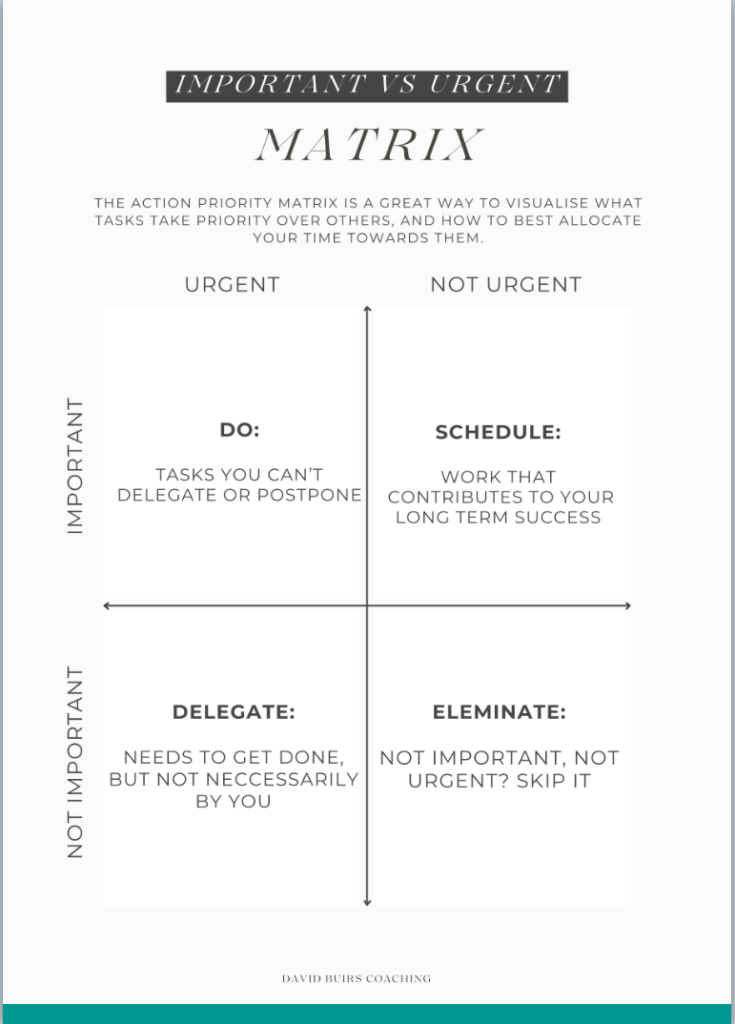
To master time management for new managers, you must look at your tasks through the lens of the Important vs Urgent Matrix. Most managers live in the bottom-left quadrant—tasks that need to get done, but not necessarily by you. This is the “Delegate” zone.
Efficiency as a byproduct of Personal Leadership
Real leadership is the art of becoming obsolete in the daily operations so you can focus on the growth of the team. If you are still “doing” instead of “leading,” you are stealing development opportunities from your team. Effective time management is not about doing more; it is about doing less, better. Here are 3 tips to help you:
-
Kill the notifications: It takes 23 minutes to regain deep focus after a distraction.
-
The 60-minute block: Schedule one hour of “uninterruptible” time daily for strategic thinking.
-
The “No” Audit: If a task doesn’t require your specific leadership level, it belongs on someone else’s desk.
Investing just 2 hours a month in leadership coaching provides the external perspective needed to stop being a firefighter and start being a leader.
Schedule a free introduction call here to discuss the possibilities for your specific situation.



No comment yet, add your voice below!