Great Leaders Are Great Communicators

Think of someone you know that communicates really well.

And someone that doesn’t.

What makes the difference?

Communication in leadership is like fine-tuning a musical instrumentโ€”it makes every performance better.

Especially for starting managers, getting this right from the beginning gives you a head start.

Hereโ€™s a challenge for you: ๐—ฐ๐—ต๐—ผ๐—ผ๐˜€๐—ฒ ๐—ผ๐—ป๐—ฒ ๐—ฎ๐˜€๐—ฝ๐—ฒ๐—ฐ๐˜ ๐—ผ๐—ณ ๐˜†๐—ผ๐˜‚๐—ฟ ๐—ฐ๐—ผ๐—บ๐—บ๐˜‚๐—ป๐—ถ๐—ฐ๐—ฎ๐˜๐—ถ๐—ผ๐—ป ๐˜๐—ผ ๐—ถ๐—บ๐—ฝ๐—ฟ๐—ผ๐˜ƒ๐—ฒ ๐˜๐—ต๐—ถ๐˜€ ๐—บ๐—ผ๐—ป๐˜๐—ต.

Need inspiration? Below youโ€™ll find some ideas:

๐—”๐—ฐ๐˜๐—ถ๐˜ƒ๐—ฒ ๐—Ÿ๐—ถ๐˜€๐˜๐—ฒ๐—ป๐—ถ๐—ป๐—ด
๐Ÿ“Œ Tip: Use reflective listening techniques, such as paraphrasing what the speaker has said to confirm understanding.

๐—–๐—น๐—ฒ๐—ฎ๐—ฟ ๐—”๐—ฟ๐˜๐—ถ๐—ฐ๐˜‚๐—น๐—ฎ๐˜๐—ถ๐—ผ๐—ป
๐Ÿ“Œ Tip: Before communicating, take a moment to organize your thoughts to ensure clarity and precision in your message.

๐—ฃ๐—ฒ๐—ฟ๐˜€๐˜‚๐—ฎ๐˜€๐—ถ๐˜ƒ๐—ฒ ๐—–๐—ผ๐—บ๐—บ๐˜‚๐—ป๐—ถ๐—ฐ๐—ฎ๐˜๐—ถ๐—ผ๐—ป
๐Ÿ“Œ Tip: Remember WIIFM โ€“ โ€œWhatโ€™s In It For Meโ€? โ€“ A thought thatโ€™s often on our minds (we are human, after all). If you can pro-actively address this in your communication, youโ€™re more convincing.

๐—”๐—ฑ๐—ฎ๐—ฝ๐˜๐—ฎ๐—ฏ๐—ถ๐—น๐—ถ๐˜๐˜† ๐—ถ๐—ป ๐—–๐—ผ๐—บ๐—บ๐˜‚๐—ป๐—ถ๐—ฐ๐—ฎ๐˜๐—ถ๐—ผ๐—ป
๐Ÿ“Œ Tip: Adjust your communication style to match the preferences of your audienceโ€”some may prefer directness, while others may need more context.

๐—”๐—ฐ๐˜๐—ถ๐˜ƒ๐—ฒ ๐—”๐˜€๐—ธ๐—ถ๐—ป๐—ด ๐—ณ๐—ผ๐—ฟ ๐—™๐—ฒ๐—ฒ๐—ฑ๐—ฏ๐—ฎ๐—ฐ๐—ธ
๐Ÿ“Œ Tip: Regularly ask for feedback on your communication style and effectiveness, showing you value continuous improvement.

๐—–๐—ผ๐—ป๐˜๐—ฒ๐˜…๐˜ ๐—ฎ๐—ป๐—ฑ ๐—ช๐—ต๐˜†
๐Ÿ“Œ Tip: When giving instructions, starting meetings or sharing updates, always explain the context. You might see the bigger picture, but your audience might not.

๐—”๐˜€๐—ธ๐—ถ๐—ป๐—ด ๐—ค๐˜‚๐—ฒ๐˜€๐˜๐—ถ๐—ผ๐—ป๐˜€
๐Ÿ“Œ Tip: Ask open-ended questions that start with “what” or “how” to encourage detailed responses and deeper discussions.

Improving how you communicate can dramatically enhance your interactions and the impact you can make.

The Most Important Realization In Your Life

Is there life before death?

Wow, easy there, buddy. What a morbid question!

For many of us in the West, contemplating death is taboo. We avoid it at all costs.

While in many philosophies and cultures, from the Stoics to current day Tibet, contemplating our mortality is seen as an essential part of life.

In the West, we often overvalue โ€œtime = moneyโ€, and believe we are here on Earth only to be productive.

We can get too focused on promotions, raises or material success, forgetting that those things in itself do not lead to happiness.

We act like we only live to work.

But is that true?

Letโ€™s do a thought experiment..

What if you knew you only have 1 more month to live?

Would you then lay awake at night, thinking about what your manager said to you? Or about that presentation that didnโ€™t go as planned?

Would you add that extra project to your already full schedule, or would you choose to spend more time with friends or family?

Would you spend your commute mindlessly scrolling the news, or would you enjoy the colours in the sky?

If you would do things differently after hearing that news – why not do it now?

Work is an essential part of our life. But itโ€™s not the reason why weโ€™re here.

Reflect on what it means to you to live a full and happy life.

You donโ€™t even have to switch jobs, as there are many ways to make your current job more enjoyable and meaningful.

In the evening, spend five minutes reflecting on your day. Write about moments or people that made you feel alive, connected, or genuinely happy.

This helps in recognizing the value of your daily experiences beyond work achievements and material success.

Burning yourself out chasing after more senior titles or money will not get you what you hope for. It never does in the end.

Instead, work to make a positive impact โ€“ on your team, your company and for your clients.

Work to grow, learn, and have fun.

Work to connect with people.

Work to support your life outside of work.

You only have one life.

Make the most out of it.

Why Your Next Promotion Might Be Your Last (Unless You’re Aware of This) 2/2

I always saw myself as a good listener. Until I realized I wasnโ€™t…

Last week I wrote about ๐˜๐—ต๐—ฒ ๐—ฃ๐—ฒ๐˜๐—ฒ๐—ฟ ๐—ฃ๐—ฟ๐—ถ๐—ป๐—ฐ๐—ถ๐—ฝ๐—น๐—ฒ โ€“ you keep getting promoted, until you hit the ceiling of your competence.

Then, the requirements of the role exceed your capabilities and you stop being promoted.

For competence, think about things like your ability to think strategically, your emotional intelligence, your leadership skills, your communication skills, or your ability to analyse complex problems.

Competence is not set in stone โ€“ you can increase it.

But here, weโ€™re faced with an invisible enemy โ€“ the ๐——๐˜‚๐—ป๐—ป๐—ถ๐—ป๐—ด-๐—ž๐—ฟ๐˜‚๐—ด๐—ฒ๐—ฟ ๐—ฒ๐—ณ๐—ณ๐—ฒ๐—ฐ๐˜.

Itโ€™s a cognitive bias that makes people with low ability in a specific area, overestimate their ability in that area. It’s unconscious incompetence.

In many experiments, Dunning and Krugerโ€™s observed that people who objectively score among the lowest 25%, rate themselves to be in the 50-75% range.

A practical example: many people who believe they are good listeners, in fact arenโ€™t.

For me, the realization came when I truly listened to feedback. And then explored the topic of what listening is about, and how to become good at it.

Letโ€™s tie last weekโ€™s post and this topic together:

โ€ข You keep getting promoted in organizations, until you hit your level of competence (๐—ฃ๐—ฒ๐˜๐—ฒ๐—ฟ ๐—ฃ๐—ฟ๐—ถ๐—ป๐—ฐ๐—ถ๐—ฝ๐—น๐—ฒ).
โ€ข To keep getting promoted, increase your level of competence.
โ€ข For those skills we need to increase our competence for, we overestimate our ability (๐——๐˜‚๐—ป๐—ป๐—ถ๐—ป๐—ด-๐—ž๐—ฟ๐˜‚๐—ด๐—ฒ๐—ฟ ๐—ฒ๐—ณ๐—ณ๐—ฒ๐—ฐ๐˜).
โ€ข This prevents us from putting in the effort to improve, which keeps our level of competence, and our career, where it is.

What can you do?

โ€ข Take assessments on particular skills required for your role.
โ€ข Ask for 360-feedback from your colleagues (anonymous or not). Be open to criticism.
โ€ข Question your beliefs about what you know and what you donโ€™t yet know.
โ€ข Keep learning.

There is no need to become insecure and doubtful about your abilities. But realize information is power.

And, a few weeks after International Womenโ€™s Day, for managers and organisations, I also want to call out the ๐—ฃ๐—ฎ๐˜‚๐—น๐—ฎ ๐—ฃ๐—ฟ๐—ถ๐—ป๐—ฐ๐—ถ๐—ฝ๐—น๐—ฒ. It describes how many women in organisations work below their level of competence. Using objective data can help us counter this

So, identify the skills critical for your role and the next. Use data and feedback for an honest assessment, and then, take action.

Your future-you will thank you for it.

How To Have Difficult Conversations As Manager?

Struggling with tough conversations as a new manager? You’re not aloneโ€”over 90% of your peers feel the same.

I’ve certainly been there. Feeling anxious before feedback sessions or dreading delivering bad news.

So what turns your regular chat into a difficult conversation?

1) ๐—ข๐—ฝ๐—ฝ๐—ผ๐˜€๐—ถ๐—ป๐—ด ๐˜ƒ๐—ถ๐—ฒ๐˜„๐˜€ย  โžก โฌ…
2) The ๐—ผ๐˜‚๐˜๐—ฐ๐—ผ๐—บ๐—ฒ ๐—บ๐—ฎ๐˜๐˜๐—ฒ๐—ฟ๐˜€ โ—
3) ๐—˜๐—บ๐—ผ๐˜๐—ถ๐—ผ๐—ป๐˜€ run high ๐Ÿ˜จ

Ironically, the more important the conversation, the harder it is to handle it well.

To guide you, Iโ€™ve created these slides for you. The information comes from a book I love: ๐˜Š๐˜ณ๐˜ถ๐˜ค๐˜ช๐˜ข๐˜ญ ๐˜Š๐˜ฐ๐˜ฏ๐˜ท๐˜ฆ๐˜ณ๐˜ด๐˜ข๐˜ต๐˜ช๐˜ฐ๐˜ฏ๐˜ด.

With over 4 million copies sold, itโ€™s a game-changer for leaders.

It helped me tremendously in my career. I hope it can help you too.

If you want to discuss specific situations that you find challenging, do reach out, I’d love to help.

See -Free Downloads- for the PDF file.

Outsmarting AI – Why Human Skills Are Your Super Power In 2024

With AI increasingly handling technical tasks, the spotlight is on human skills โ€“ those essential, automation-resistant qualities that enrich our work interactions.

Think empathy, compassion, intuition, and leadership; they’re not just nice to have, they’re crucial for your career success.

Recent insights from 650 L&D and HR leaders confirm this trend, placing human skills on the second highest priority on the L&D agenda, just after business skills. As AI transforms technical work, the human touch grows in importance.

Particularly for leaders, strong human skills are becoming indispensable. (โ€˜๐˜š๐˜ฐ๐˜ง๐˜ต ๐˜ด๐˜ฌ๐˜ช๐˜ญ๐˜ญ๐˜ดโ€™? – 2023 called, they want you back).

Case in point: “Manager effectiveness”, which is includes human skills like leadership and adaptability, is now the #1 concern for HR leaders worldwide (๐˜ด๐˜ฐ๐˜ถ๐˜ณ๐˜ค๐˜ฆ: ๐˜Š๐˜ฐ๐˜ถ๐˜ณ๐˜ด๐˜ฆ๐˜ณ๐˜ข ๐˜‘๐˜ฐ๐˜ฃ ๐˜š๐˜ฌ๐˜ช๐˜ญ๐˜ญ๐˜ด ๐˜™๐˜ฆ๐˜ฑ๐˜ฐ๐˜ณ๐˜ต 2024). This indicates a growing emphasis on these competencies in modern management.

If you’re ready to develop these skills but unsure where to start, consider Active Listening, a foundational element of true connection and communication.

Transitioning from listening to analyze to listening to understand was a personal gamechanger for me. ๐Ÿ’ก

This key skill strongly supports workplace communication and relationships. There are plenty of resources, including many free YouTube videos, to help you get started.

Enhancing these human skills in 2024 and beyond will not only keep us relevant, but also amplify our impact in an AI-driven professional world.

At the beginning of this new year, take a moment to consider: which human skill do you want to strengthen in 2024? Your choice could significantly shape your professional path.

A Quick And Easy Way To Increase Happiness

๐—ฆ๐—ผ๐—บ๐—ฒ ๐—ณ๐—ฟ๐—ฒ๐—ฒ ๐˜€๐—ฒ๐—ฟ๐—ผ๐˜๐—ผ๐—ป๐—ถ๐—ป๐—ฒ ๐—ฎ๐—ป๐—ฑ ๐—ฑ๐—ผ๐—ฝ๐—ฎ๐—บ๐—ถ๐—ป๐—ฒ, ๐—ฎ๐—ป๐˜†๐—ผ๐—ป๐—ฒ?

Having explored the value of showing appreciation in our professional lives, I’m curious to hear about your experiences. Did it bring a new energy to your work interactions?

Today Iโ€™d love to share some insights with you around how gratitude can benefit you in your personal life.

Feeling grateful has been scientifically proven to trigger positive changes in your brain. It boosts the production of serotonin and dopamine โ€“ the neurotransmitters responsible for feelings of happiness and well-being.

At the same time, it lowers cortisol levels, effectively reducing stress.

๐—›๐—ผ๐˜„ ๐˜๐—ผ ๐—˜๐—บ๐—ฏ๐—ฒ๐—ฑ ๐—š๐—ฟ๐—ฎ๐˜๐—ถ๐˜๐˜‚๐—ฑ๐—ฒ ๐—ถ๐—ป ๐—ฌ๐—ผ๐˜‚๐—ฟ ๐——๐—ฎ๐—ถ๐—น๐˜† ๐—Ÿ๐—ถ๐—ณ๐—ฒ

An easy way to embed gratitude in your life, is to start a gratitude journal. Each day, take a moment to write down three things you’re grateful for. These could be simple joys, friends or loved ones, or the beauty in everyday moments.

Or, integrate gratitude into a daily ritual, like sipping your morning coffee, to reflect on who or what brings positivity into your life.

๐—”๐—ฝ๐—ฝ๐—ฟ๐—ฒ๐—ฐ๐—ถ๐—ฎ๐˜๐—ถ๐—ป๐—ด ๐˜๐—ต๐—ฒ ๐—š๐—ถ๐—ณ๐˜๐˜€ ๐—”๐—ฟ๐—ผ๐˜‚๐—ป๐—ฑ ๐—ฌ๐—ผ๐˜‚

Personally, I try to include the often-overlooked miracles in my gratitude practice. Our ability to see the sunrise, hear music, or simply the fact of being alive today are extraordinary gifts. Recognizing these aspects can bring a deeper sense of appreciation and joy to your life.

๐— ๐—ฎ๐—ธ๐—ฒ ๐—ถ๐˜ ๐—ช๐—ผ๐—ฟ๐—ธ ๐—ณ๐—ผ๐—ฟ ๐—ฌ๐—ผ๐˜‚

I encourage you to try a two-minute daily practice for the next two weeks, and to avoid negative thoughts or words during those 2 minutes. Research shows this leads to the biggest results. Observe how this small commitment can lead to a noticeable shift in your stress levels and overall happiness.

Good luck! ๐Ÿ™๐Ÿป

Why Is Psychological Safety A Game-Changer At Work?

What sets high-performing teams apart?

It’s not just skills or hard workโ€”it’s the climate of trust they operate in, where making mistakes is not a fireable offense but a growth opportunity.

Yesterday, I had the pleasure of attending an eye-opening workshop by Gabriele Galassi, organized by the inspiring the D2 collective.

The topic: psychological safety at work.

A standout insight?

Googleโ€™s research shows that top teams succeed not because they are smarter, but because there is more psychological safety.

Psychological safety is ๐˜ข ๐˜ด๐˜ฉ๐˜ข๐˜ณ๐˜ฆ๐˜ฅ ๐˜ฃ๐˜ฆ๐˜ญ๐˜ช๐˜ฆ๐˜ง ๐˜ฉ๐˜ฆ๐˜ญ๐˜ฅ ๐˜ฃ๐˜บ ๐˜ฎ๐˜ฆ๐˜ฎ๐˜ฃ๐˜ฆ๐˜ณ๐˜ด ๐˜ฐ๐˜ง ๐˜ข ๐˜ต๐˜ฆ๐˜ข๐˜ฎ ๐˜ต๐˜ฉ๐˜ข๐˜ต ๐˜ต๐˜ฉ๐˜ฆ ๐˜ต๐˜ฆ๐˜ข๐˜ฎ ๐˜ช๐˜ด ๐˜ด๐˜ข๐˜ง๐˜ฆ ๐˜ง๐˜ฐ๐˜ณ ๐˜ช๐˜ฏ๐˜ต๐˜ฆ๐˜ณ๐˜ฑ๐˜ฆ๐˜ณ๐˜ด๐˜ฐ๐˜ฏ๐˜ข๐˜ญ ๐˜ณ๐˜ช๐˜ด๐˜ฌ-๐˜ต๐˜ข๐˜ฌ๐˜ช๐˜ฏ๐˜จ.

Safer to speak up, challenge norms, make mistakes, report errors and give each other tough feedback.

A few more learnings from yesterday I want to share with you:

๐Ÿ“Œ Having a great variation of nationalities on a team promotes psychological safety.

๐Ÿ“Œ Team cohesion is another strong predictor of performance. Teams where members are willing and able to establish strong relationships, to listen and feel empathy for each other and to give and take feedback, perform better than regular teams.

๐Ÿ“Œ In the workplace, we start overvaluing tasks over relationships. Starting the day with a relationship-building exercise over a task-oriented meeting, can have surprisingly beneficial results.

๐Ÿ“Œ A characteristic of high-performing teams is that members speak roughly in equal measure, keeping contributions short and sweet.

Improving psychological safety and team cohesion is one of the topics I work on with my ambitious leadership development clients.

Do you want to boost your teamโ€™s performance too?

Letโ€™s connect!

How To Be Assertive AND Empathetic?

Too hard or too soft? It’s not a pillow questionโ€”it’s about leadership style.

An effective leader knows how to combine assertiveness with empathy.

Assertiveness doesn’t mean being harsh; it’s about finding the right balance between passivity and aggression.

Empathy isn’t about just accepting everything – it’s about truly understanding and sharing someone else’s feelings.

A 2500-year-old practice I’ve grown to love for increasing empathy and compassion is ‘Metta’, or ‘loving-kindness’ meditation.

I was skeptical at first, but integrating it into my routine increased my empathy and changed how I connect with others.

How to practice ‘๐— ๐—ฒ๐˜๐˜๐—ฎ’?

๐—™๐—ถ๐—ป๐—ฑ ๐—ฎ ๐—ค๐˜‚๐—ถ๐—ฒ๐˜ ๐—ฆ๐—ฝ๐—ผ๐˜: Sit comfortably, close your eyes.

๐—ฉ๐—ถ๐˜€๐˜‚๐—ฎ๐—น๐—ถ๐˜‡๐—ฒ ๐—ฆ๐—ผ๐—บ๐—ฒ๐—ผ๐—ป๐—ฒ ๐—ฌ๐—ผ๐˜‚ ๐—–๐—ฎ๐—ฟ๐—ฒ ๐—”๐—ฏ๐—ผ๐˜‚๐˜: Start by picturing your best friend. Wish them health, happiness, and well-being. Connect with these feelings.

๐—˜๐˜…๐—ฝ๐—ฎ๐—ป๐—ฑ ๐—ฌ๐—ผ๐˜‚๐—ฟ ๐—ฆ๐—ฐ๐—ผ๐—ฝ๐—ฒ: Gradually move to someone neutral, like a helpful store clerk, and then to someone you have difficulties with or don’t like.

๐—ช๐—ถ๐˜€๐—ต ๐—ง๐—ต๐—ฒ๐—บ ๐—ช๐—ฒ๐—น๐—น: Remember, this isnโ€™t just for them; itโ€™s for enhancing your own emotional powers.

By practicing these steps, you’re strengthening your empathy muscle by creating stronger neural pathways for compassion and empathy in your brain.

Interested in mastering both assertive and empathetic leadership?

Letโ€™s chat about how these skills can transform your approach and help you lead more effectively.

Creating Long-Term Behavioral Change – What’s The Secret?

Remember your New Yearโ€™s resolutions? Howโ€™s that going?

If yours are barely hanging on, youโ€™re not alone โ€” less than 10% of us keep them alive.

Harvardโ€™s Kegan and Laheyโ€™s groundbreaking book “Immunity to Changeโ€, shows us why.

In a nutshell โ€“ we have โ€˜hidden commitmentsโ€™ (subconscious promises) to ourselves, that conflict with our best intentions to change.

These deeply influence our actions.

Kegan and Lahey’s work shows how we unknowingly shield ourselves from change with our hidden commitments and fears, despite our efforts to evolve.

Without realizing this, long lasting change is almost impossible.

Take delegation, for example.

On the surface, it seems straightforward: you’re swamped with work and need to offload some tasks to your team.

However, despite your best intentions, you find yourself hesitating to delegate.

The Immunity to Change framework might reveal a hidden commitment to always being the one who solves problems.

Perhaps it’s driven by an underlying assumption that if you’re not the one fixing things, your value as a leader diminishes.

Another common workplace scenario is receiving feedback.

You know it’s essential for growth, yet each time feedback is offered, you defensively justify your actions or dismiss the suggestions.

This resistance could come from a conflicting hidden commitment to maintaining your self-image as competent and perfect.

Strengthened by the assumption that any criticism is a threat to your identity.

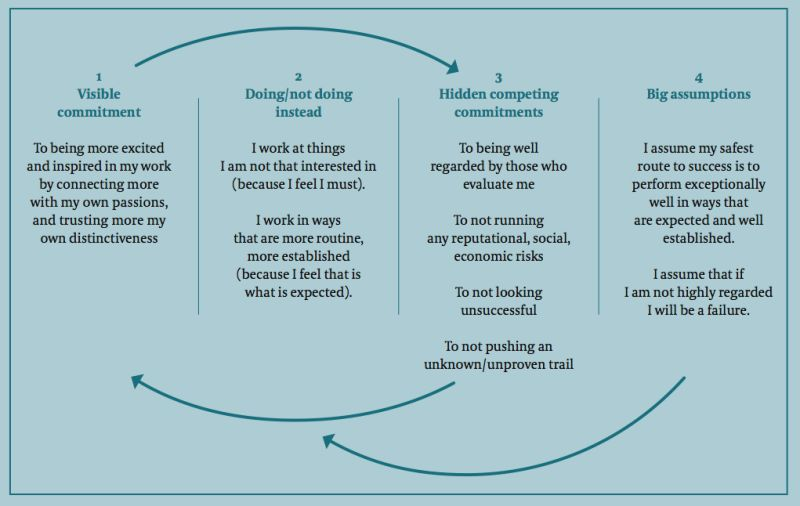
How to solve this? Visualize these internal dynamics, with an Immunity to Change-map.

It always consists of the same 4 columns:

1. ๐—ช๐—ต๐—ฎ๐˜ ๐˜„๐—ฒ ๐—ฎ๐—ถ๐—บ ๐˜๐—ผ ๐—ฑ๐—ผ (e.g., be a better listener),
2. ๐—ช๐—ต๐—ฎ๐˜ ๐˜„๐—ฒ ๐—ฒ๐—ป๐—ฑ ๐˜‚๐—ฝ ๐—ฑ๐—ผ๐—ถ๐—ป๐—ด ๐—ถ๐—ป๐˜€๐˜๐—ฒ๐—ฎ๐—ฑ (dismiss differing opinions),
3. ๐—ข๐˜‚๐—ฟ ๐—ต๐—ถ๐—ฑ๐—ฑ๐—ฒ๐—ป ๐—ฐ๐—ผ๐—บ๐—บ๐—ถ๐˜๐—บ๐—ฒ๐—ป๐˜๐˜€ (only valuing aligned views),
4. ๐—ง๐—ต๐—ฒ ๐—ฎ๐˜€๐˜€๐˜‚๐—บ๐—ฝ๐˜๐—ถ๐—ผ๐—ป๐˜€ ๐—ณ๐˜‚๐—ฒ๐—น๐—ถ๐—ป๐—ด ๐˜๐—ต๐—ฒ๐˜€๐—ฒ ๐—ฐ๐—ผ๐—บ๐—บ๐—ถ๐˜๐—บ๐—ฒ๐—ป๐˜๐˜€ (believing Iโ€™m always right).

Our visible commitments (what we aim to do) and our hidden commitments conflict with each other.

By mapping this out, we can actually see why we are sabotaging our intentions to change.

Acknowledging these hidden commitments and the assumptions fueling them is the first step.

Next, challenge these beliefs. Do they really serve you? Or do you merely serve them?

Personally, I tried to become a better listener (1).

And at the same time, when listening I focused mostly on verifying if their story matched my beliefs (2), which blocks actual listening.

My hidden, subconscious, commitment to myself, was to only listen to opinions I agree with (3).

The hidden (and ๐˜ง๐˜ญ๐˜ข๐˜ธ๐˜ฆ๐˜ฅ) assumption: I know whatโ€™s right (4).

Mapping out your Immunity-to-Change map can lead to breakthroughs and transformational growth.

It works both for individuals, teams and organisations.

Ready to see what’s really holding you back? Message me to start mapping your route to real change.

The Many Benefits of Finding Your Purpose

โ€œA study found a 15% (!) drop in the risk of dying over the next decade for people finding their purpose, regardless of age.โ€

What?!

Raise your hand if you ever subtly rolled your eyes at the mentioning of “finding your purpose ๐Ÿ’ซ”? I get it โ€“ it can sound like part of a motivational YouTube video.

If youโ€™re like me, youโ€™d rather trust data and research than grandiose terms. No crystal-balls magic, just empirically proven benefits. ๐Ÿ’ผ

Well, the research paints a compelling picture: knowing and living your life purpose isn’t just warm and fuzzy; it’s the secret sauce for success.

Here are some of the amazing benefits (sources provided below), accessible for everyone:

๐Ÿ’ช A long-term study found that making a significant step towards finding your purpose caused a 15% drop in the risk of dying over the next decade.

๐ŸŒˆ More happiness, stronger relationships, better sleep, and mental health.

๐Ÿ’ฐ Having a sense of purpose predicts greater income and net worth.

๐Ÿš€ And it’s not just personal โ€“ purpose is a key ingredient to exceptional leadership.

โฌ† For companies, aligning individual and organizational purpose brings a ton of benefits, from a fourfold boost in engagement to a twofold increase in employee retention.

So many advantages, whatโ€™s the catch? Do you need to save the whales to reap the benefits? Win a Nobel Prize? No, not at all.

(Donโ€™t let me stop you though. ๐Ÿ‹)

Also, it’s personal โ€“ you donโ€™t have to share it with anyone. ๐Ÿคซ

And here’s the kicker: purpose works regardless of your worldview, religion, or lack thereof. It’s about the impact you want to make – for yourself and others.