Creating Long-Term Behavioral Change – What’s The Secret?

Remember your New Year’s resolutions? How’s that going?

If yours are barely hanging on, you’re not alone — less than 10% of us keep them alive.

Harvard’s Kegan and Lahey’s groundbreaking book “Immunity to Change”, shows us why.

In a nutshell – we have ‘hidden commitments’ (subconscious promises) to ourselves, that conflict with our best intentions to change.

These deeply influence our actions.

Kegan and Lahey’s work shows how we unknowingly shield ourselves from change with our hidden commitments and fears, despite our efforts to evolve.

Without realizing this, long lasting change is almost impossible.

Take delegation, for example.

On the surface, it seems straightforward: you’re swamped with work and need to offload some tasks to your team.

However, despite your best intentions, you find yourself hesitating to delegate.

The Immunity to Change framework might reveal a hidden commitment to always being the one who solves problems.

Perhaps it’s driven by an underlying assumption that if you’re not the one fixing things, your value as a leader diminishes.

Another common workplace scenario is receiving feedback.

You know it’s essential for growth, yet each time feedback is offered, you defensively justify your actions or dismiss the suggestions.

This resistance could come from a conflicting hidden commitment to maintaining your self-image as competent and perfect.

Strengthened by the assumption that any criticism is a threat to your identity.

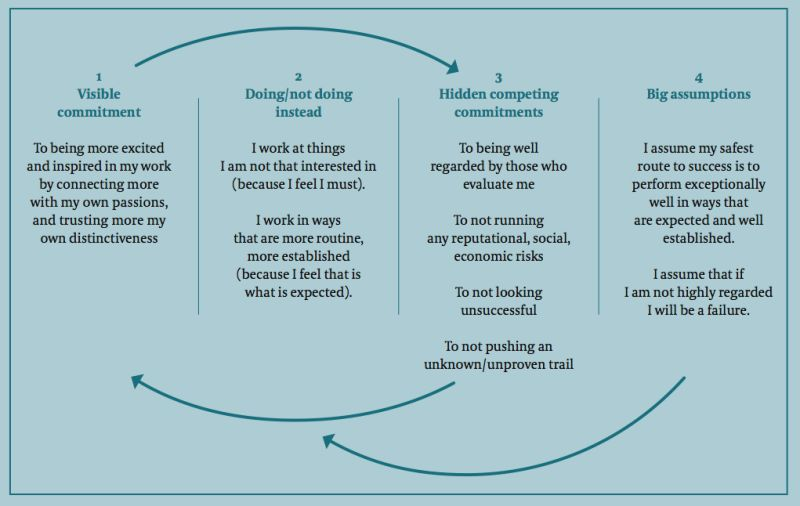
How to solve this? Visualize these internal dynamics, with an Immunity to Change-map.

It always consists of the same 4 columns:

1. 𝗪𝗵𝗮𝘁 𝘄𝗲 𝗮𝗶𝗺 𝘁𝗼 𝗱𝗼 (e.g., be a better listener),
2. 𝗪𝗵𝗮𝘁 𝘄𝗲 𝗲𝗻𝗱 𝘂𝗽 𝗱𝗼𝗶𝗻𝗴 𝗶𝗻𝘀𝘁𝗲𝗮𝗱 (dismiss differing opinions),
3. 𝗢𝘂𝗿 𝗵𝗶𝗱𝗱𝗲𝗻 𝗰𝗼𝗺𝗺𝗶𝘁𝗺𝗲𝗻𝘁𝘀 (only valuing aligned views),
4. 𝗧𝗵𝗲 𝗮𝘀𝘀𝘂𝗺𝗽𝘁𝗶𝗼𝗻𝘀 𝗳𝘂𝗲𝗹𝗶𝗻𝗴 𝘁𝗵𝗲𝘀𝗲 𝗰𝗼𝗺𝗺𝗶𝘁𝗺𝗲𝗻𝘁𝘀 (believing I’m always right).

Our visible commitments (what we aim to do) and our hidden commitments conflict with each other.

By mapping this out, we can actually see why we are sabotaging our intentions to change.

Acknowledging these hidden commitments and the assumptions fueling them is the first step.

Next, challenge these beliefs. Do they really serve you? Or do you merely serve them?

Personally, I tried to become a better listener (1).

And at the same time, when listening I focused mostly on verifying if their story matched my beliefs (2), which blocks actual listening.

My hidden, subconscious, commitment to myself, was to only listen to opinions I agree with (3).

The hidden (and 𝘧𝘭𝘢𝘸𝘦𝘥) assumption: I know what’s right (4).

Mapping out your Immunity-to-Change map can lead to breakthroughs and transformational growth.

It works both for individuals, teams and organisations.

Ready to see what’s really holding you back? Message me to start mapping your route to real change.
The Many Benefits of Finding Your Purpose

“A study found a 15% (!) drop in the risk of dying over the next decade for people finding their purpose, regardless of age.”

What?!

Raise your hand if you ever subtly rolled your eyes at the mentioning of “finding your purpose 💫”? I get it – it can sound like part of a motivational YouTube video.

If you’re like me, you’d rather trust data and research than grandiose terms. No crystal-balls magic, just empirically proven benefits. 💼

Well, the research paints a compelling picture: knowing and living your life purpose isn’t just warm and fuzzy; it’s the secret sauce for success.

Here are some of the amazing benefits (sources provided below), accessible for everyone:

💪 A long-term study found that making a significant step towards finding your purpose caused a 15% drop in the risk of dying over the next decade.

🌈 More happiness, stronger relationships, better sleep, and mental health.

💰 Having a sense of purpose predicts greater income and net worth.

🚀 And it’s not just personal – purpose is a key ingredient to exceptional leadership.

⬆ For companies, aligning individual and organizational purpose brings a ton of benefits, from a fourfold boost in engagement to a twofold increase in employee retention.

So many advantages, what’s the catch? Do you need to save the whales to reap the benefits? Win a Nobel Prize? No, not at all.

(Don’t let me stop you though. 🐋)

Also, it’s personal – you don’t have to share it with anyone. 🤫

And here’s the kicker: purpose works regardless of your worldview, religion, or lack thereof. It’s about the impact you want to make – for yourself and others.

What Problems And Questions From My Team Should I Take On – And What Not?

Who else has felt the overwhelming urge to solve every problem that lands on their desk?

It’s a common trap for new managers, feeling like you need to be the hero.

Imagine walking around with a big backpack. 🎒

Every time your team comes to you with a problem, you have a choice – do you accept the problem and add it to your backpack, or not?

Put too much in your backpack, and you won’t be able to move anymore.

Great leadership isn’t about how many problems you can solve; it’s about how many problems you can teach your team to solve.

📌 Here’s a quick tip: Think of yourself as a guide rather than a fixer.

Next time a direct report comes to you with an issue, ask, “What part of this can you handle, and what do you need my help with? What solution have you considered?”.

This empowers them and helps you prioritize your own workload.

👉 If you’re unsure whether to take on a problem, consider if it aligns with your key responsibilities. If it doesn’t, it’s likely not yours to solve.

Coaching your team to handle challenges not only lightens your load but also builds their confidence and skills.

This fosters a culture of problem-solving, innovation, and ownership.

Lastly, at a later moment, check-in and reflect with your team around problems you asked them to solve themselves, to build trust and enhance learning.

Training, Mentoring And Coaching – When To Use What?

Let’s look at one tool from the leadership toolkit: training, mentoring and coaching your team. 🛠

Demystifying the use of 𝘁𝗿𝗮𝗶𝗻𝗶𝗻𝗴, 𝗺𝗲𝗻𝘁𝗼𝗿𝗶𝗻𝗴, and 𝗰𝗼𝗮𝗰𝗵𝗶𝗻𝗴.

All three are essential skills for any manager.

Use the right skill at the right time to maximize your team’s development.

So, when to use what?

𝗧𝗿𝗮𝗶𝗻𝗶𝗻𝗴: 𝗟𝗲𝗮𝗿𝗻𝗶𝗻𝗴 𝗻𝗲𝘄 𝘀𝗸𝗶𝗹𝗹𝘀 🎓

Perfect for beginners, training is directive and instructional, focusing on knowledge transfer to lay a solid skill foundation. Usually short-term.

“𝘐𝘯 𝘵𝘩𝘪𝘴 𝘵𝘳𝘢𝘪𝘯𝘪𝘯𝘨 𝘴𝘦𝘴𝘴𝘪𝘰𝘯, 𝘐’𝘭𝘭 𝘵𝘦𝘢𝘤𝘩 𝘺𝘰𝘶 𝘩𝘰𝘸 𝘵𝘰 𝘥𝘰 𝘟, 𝘠, 𝘡.”

✅ 𝘛𝘪𝘱: verify, in a supportive, non-controlling way, if the training was successful and the desired skills were learned.

𝗠𝗲𝗻𝘁𝗼𝗿𝗶𝗻𝗴: 𝗥𝗲𝗰𝗲𝗶𝘃𝗶𝗻𝗴 𝗴𝘂𝗶𝗱𝗮𝗻𝗰𝗲 🧭

Suited for mid-level to senior team members, mentoring offers guidance and wisdom from personal experience. Guide your team members on their professional journey. Longer term.

“𝘍𝘳𝘰𝘮 𝘮𝘺 𝘦𝘹𝘱𝘦𝘳𝘪𝘦𝘯𝘤𝘦, 𝘩𝘦𝘳𝘦’𝘴 𝘩𝘰𝘸 𝘐 𝘵𝘢𝘤𝘬𝘭𝘦𝘥 𝘴𝘪𝘮𝘪𝘭𝘢𝘳 𝘤𝘩𝘢𝘭𝘭𝘦𝘯𝘨𝘦𝘴. 𝘞𝘩𝘢𝘵 𝘴𝘵𝘳𝘢𝘵𝘦𝘨𝘪𝘦𝘴 𝘥𝘰 𝘺𝘰𝘶 𝘵𝘩𝘪𝘯𝘬 𝘤𝘰𝘶𝘭𝘥 𝘸𝘰𝘳𝘬 𝘧𝘰𝘳 𝘺𝘰𝘶?”

✅ 𝘛𝘪𝘱: the relationship is essential in mentoring – take a genuine interest in your mentee.

𝗖𝗼𝗮𝗰𝗵𝗶𝗻𝗴: 𝗣𝗲𝗿𝘀𝗼𝗻𝗮𝗹 𝗮𝗻𝗱 𝗽𝗿𝗼𝗳𝗲𝘀𝘀𝗶𝗼𝗻𝗮𝗹 𝗴𝗿𝗼𝘄𝘁𝗵 🚀

Ideal for more senior team members, coaching is an equal partnership that promotes self-discovery and maximizes their potential. No advice or instructions are given.

Through questions, help your coachee discover what they want, and how they’ll get there. Only effective if coachee is motivated to be coached.

“𝘞𝘩𝘢𝘵 𝘰𝘶𝘵𝘤𝘰𝘮𝘦𝘴 𝘢𝘳𝘦 𝘺𝘰𝘶 𝘢𝘪𝘮𝘪𝘯𝘨 𝘧𝘰𝘳 𝘵𝘩𝘪𝘴 𝘲𝘶𝘢𝘳𝘵𝘦𝘳, 𝘢𝘯𝘥 𝘩𝘰𝘸 𝘤𝘢𝘯 𝘺𝘰𝘶 𝘢𝘭𝘪𝘨𝘯 𝘺𝘰𝘶𝘳 𝘢𝘤𝘵𝘪𝘰𝘯𝘴 𝘵𝘰 𝘢𝘤𝘩𝘪𝘦𝘷𝘦 𝘵𝘩𝘦𝘮?”

✅ 𝘛𝘪𝘱: a good coach is a good listener – practice active listening and ask open-ended questions.

Every team member, regardless of their role or seniority, might find value in training, mentoring, or coaching, tailored to their unique needs at different times.

Which of the three did you benefit the most from in your career?

Feeling Better By Showing More Appreciation At Work (2)

𝗦𝗼𝗺𝗲 𝗳𝗿𝗲𝗲 𝘀𝗲𝗿𝗼𝘁𝗼𝗻𝗶𝗻𝗲 𝗮𝗻𝗱 𝗱𝗼𝗽𝗮𝗺𝗶𝗻𝗲, 𝗮𝗻𝘆𝗼𝗻𝗲?

Having explored the value of showing appreciation in our professional lives, I’m curious to hear about your experiences. Did it bring a new energy to your work interactions?

Today I’d love to share some insights with you around how gratitude can benefit you in your personal life.

Feeling grateful has been scientifically proven to trigger positive changes in your brain. It boosts the production of serotonin and dopamine – the neurotransmitters responsible for feelings of happiness and well-being.

At the same time, it lowers cortisol levels, effectively reducing stress.

𝗛𝗼𝘄 𝘁𝗼 𝗘𝗺𝗯𝗲𝗱 𝗚𝗿𝗮𝘁𝗶𝘁𝘂𝗱𝗲 𝗶𝗻 𝗬𝗼𝘂𝗿 𝗗𝗮𝗶𝗹𝘆 𝗟𝗶𝗳𝗲

An easy way to embed gratitude in your life, is to start a gratitude journal. Each day, take a moment to write down three things you’re grateful for. These could be simple joys, friends or loved ones, or the beauty in everyday moments.

Or, integrate gratitude into a daily ritual, like sipping your morning coffee, to reflect on who or what brings positivity into your life.

𝗔𝗽𝗽𝗿𝗲𝗰𝗶𝗮𝘁𝗶𝗻𝗴 𝘁𝗵𝗲 𝗚𝗶𝗳𝘁𝘀 𝗔𝗿𝗼𝘂𝗻𝗱 𝗬𝗼𝘂

Personally, I try to include the often-overlooked miracles in my gratitude practice. Our ability to see the sunrise, hear music, or simply the fact of being alive today are extraordinary gifts. Recognizing these aspects can bring a deeper sense of appreciation and joy to your life.

𝗠𝗮𝗸𝗲 𝗶𝘁 𝗪𝗼𝗿𝗸 𝗳𝗼𝗿 𝗬𝗼𝘂

I encourage you to try a two-minute daily practice for the next two weeks, and to avoid negative thoughts or words during those 2 minutes. Research shows this leads to the biggest results. Observe how this small commitment can lead to a noticeable shift in your stress levels and overall happiness.

Good luck! 🙏🏻

Completing My 5-Month Coaching Training

Using the words “𝘐’𝘮 𝘵𝘩𝘳𝘪𝘭𝘭𝘦𝘥 𝘢𝘯𝘥 𝘦𝘹𝘤𝘪𝘵𝘦𝘥 𝘵𝘰 𝘴𝘩𝘢𝘳𝘦” in 2024 feels a bit like using a fax machine, but it’s how I feel right now.

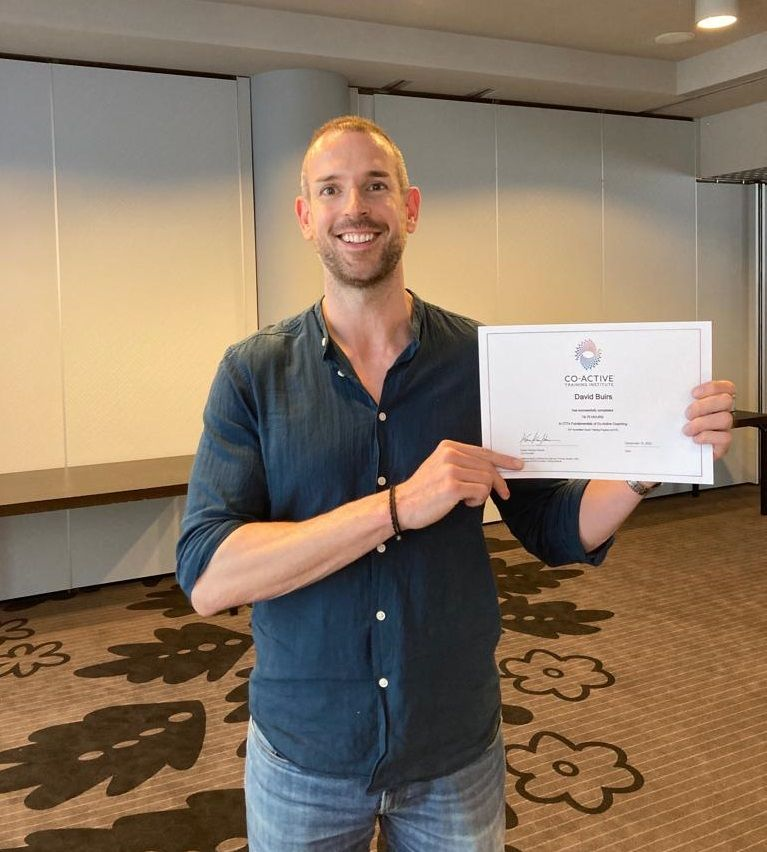
Five months after starting, I completed the Co-Active Intermediate coaching training last weekend.

I’m now trained in Co-Active Training Institute‘s effective and transformative Co-Active coaching model and ready to start coaching professionally!

A quote I heard during that weekend stayed with me:

“𝘠𝘰𝘶 𝘩𝘢𝘷𝘦 𝘵𝘸𝘰 𝘭𝘪𝘷𝘦𝘴, 𝘢𝘯𝘥 𝘺𝘰𝘶𝘳 𝘴𝘦𝘤𝘰𝘯𝘥 𝘭𝘪𝘧𝘦 𝘴𝘵𝘢𝘳𝘵𝘴 𝘵𝘩𝘦 𝘮𝘰𝘮𝘦𝘯𝘵 𝘺𝘰𝘶 𝘳𝘦𝘢𝘭𝘪𝘻𝘦 𝘺𝘰𝘶 𝘰𝘯𝘭𝘺 𝘩𝘢𝘷𝘦 𝘰𝘯𝘦.”

Five months ago, I left a decade-long career and the safety that comes with it, to start this adventure.

Looking back, this marked the beginning of my ‘second life’ – committed to helping others live happier and more fulfilling lives. And so far, I have loved every step of it.

I rediscovered my creativity, intuition, and sense of purpose. And learned that fear is just a feeling! Doing something scary for me feels liberating.

The phrase ‘making the most out of life’ always seemed cliché, until I realized it’s extremely valuable advice. And one of the things coaches help with.

A big thank-you to everyone who supported me the last 5 months, to my fellow coaches for sharing your experiences, to my Co-Active peers for your inspiration, and particularly to those I’ve coached for your openness and trust.

Interested in more happiness, balance, growth and fulfillment in life? Feel free to reach out; I’d love to discuss this further.

What’s next? I’m trained, energized, and ready to begin. Stay tuned for next week’s update on how I plan to transform clichés into realities, one coaching session at a time.

Living Longer, Healthier, Happier and More Successful Through Finding Your Purpose – What Does The Research Say?

“A study found a 15% (!) drop in the risk of dying over the next decade for people finding their purpose, regardless of age.”

What?!

Raise your hand if you ever subtly rolled your eyes at the mentioning of “finding your purpose 💫”? I get it – it can sound like part of a motivational YouTube video.

If you’re like me, you’d rather trust data and research than grandiose terms. No crystal-balls magic, just empirically proven benefits. 💼

Well, the research paints a compelling picture: knowing and living your life purpose isn’t just warm and fuzzy; it’s the secret sauce for success.

Here are some of the amazing benefits (sources provided below), accessible for everyone:

💪 A long-term study found that making a significant step towards finding your purpose caused a 15% drop in the risk of dying over the next decade.

🌈 More happiness, stronger relationships, better sleep, and mental health.

💰 Having a sense of purpose predicts greater income and net worth.

🚀 And it’s not just personal – purpose is a key ingredient to exceptional leadership.

⬆ For companies, aligning individual and organizational purpose brings a ton of benefits, from a fourfold boost in engagement to a twofold increase in employee retention.

So many advantages, what’s the catch? Do you need to save the whales to reap the benefits? Win a Nobel Prize? No, not at all.

(Don’t let me stop you though. 🐋)

Also, it’s personal – you don’t have to share it with anyone. 🤫

And here’s the kicker: purpose works regardless of your worldview, religion, or lack thereof. It’s about the impact you want to make – for yourself and others.

In coaching, we’ve got proven processes to help you discover your purpose. DM me if you’re ready to dive in. 🌟

Sources:
https://www.psychologytoday.com/us/blog/changepower/202108/10-powerful-benefits-of-living-with-purpose
https://www.sciencedirect.com/science/article/abs/pii/S0092656616300836
https://hbr.org/2014/05/from-purpose-to-impact
https://www.mckinsey.com/capabilities/people-and-organizational-performance/our-insights/purpose-not-platitudes-a-personal-challenge-for-top-executives
https://www.mckinsey.com/capabilities/people-and-organizational-performance/our-insights/igniting-individual-purpose-in-times-of-crisis

Feeling Valued And Appreciated At Work – How Gratitude and Appreciation Improves Your Relationships

Did you know 2 out of 3 people don’t always feel appreciated at work?

Feeling valued is a fundamental human need – a lack of it can make you feel demotivated, unseen or taken for granted.

While you can’t control who shows appreciation or gratitude towards you, you can take the initiative and lead by example.

Showing gratitude is as fulfilling as receiving it – it benefits both parties and strengthens relationships. 🙏

As we step into the new year, here’s a challenge for you: express genuine appreciation or gratitude to three colleagues in the next 10 days – whether it’s your manager, direct report, peer, or someone from a different department.

It doesn’t have to be spontaneous; what matters is that it’s genuine and heartfelt.

Need some inspiration? Consider these questions:

•       Who recently exceeded expectations or went above and beyond their role to support you? How did it make you feel?
•       Which colleague has a positive character trait that you value? Share why you appreciate that trait and provide an example.
•       Who made a positive impact on your team or your company’s culture? What was the result?
•       Who offered valuable advice or insights that helped you progress on a project? How did it contribute to your success?

The more you show appreciation and gratitude, the more you’ll receive in return. 🔁

Imagine if everyone reading this takes up the challenge – we could kick off 2024 with a wave of positive energy and collaboration. Let’s make it happen! 🎇 💪

Lastly, I wish you an happy, fulfilling and successful 2024!

How I Connected To And Enhanced My Intuition

[Right hand] Hi David – how are you feeling today?
[Left hand] Pretty good, thanks.
[Right hand] Can you be a bit more specific?
[Left hand] I can. I feel…

This has been my morning ritual for the last few weeks—a dialogue with myself that opens a doorway to understanding better what I am feeling in any particular moment. Now, before you start thinking I’ve gone a bit bonkers, let me share why I’ve embraced this new habit.

For much of my life, I relied heavily on logic and reasoning to make sense of the world, absorbing knowledge and analyzing everything. While certainly having it’s merits, it did not significantly enhancing the quality of my life.

In recent years, I consciously shifted focus to the realm of feelings, aiming to elevate my emotional intelligence. This journey has been enriching, enabling me to cultivate more empathy, forge deeper connections, understand myself and others better, find more meaning and sharpen my intuition.

An essential tool to increasing emotional intelligence is to regularly check in with yourself to see what emotions are present in you in that moment.

Interested? You can find many easy-to-use apps out there to support you, like Mood Meter or Feeling Wheel.

Tomorrow kicks off the fourth chapter of my Co-Active Coaching Training, called Process, where intuition plays an important role. And as connecting more to your emotions improves intuition, I’ve created this new habit a few weeks ago. Every morning I set my alarm clock to engage in some self-dialogue.

These seemingly small steps into enhancing emotional intelligence can be investments with lifelong returns, in any field, whether it’s relationships, management or business.

Anticipating the next three days with an amazing group of people, I am committed to bringing not only myself but also a touch more intuition to the table.